Back Home for Science and Big Questions: An Interview with Marián Janík
What leads someone to return to Slovakia after spending years at one of Europe’s most prestigious research institutions? For Marián Janík, the answer is not only about quantum technologies, scientific achievements, or career opportunities. It is also about curiosity, the search for truth, a connection to home, and the conviction that a scientific environment should shape not only experts, but also people capable of thinking on a grand scale.
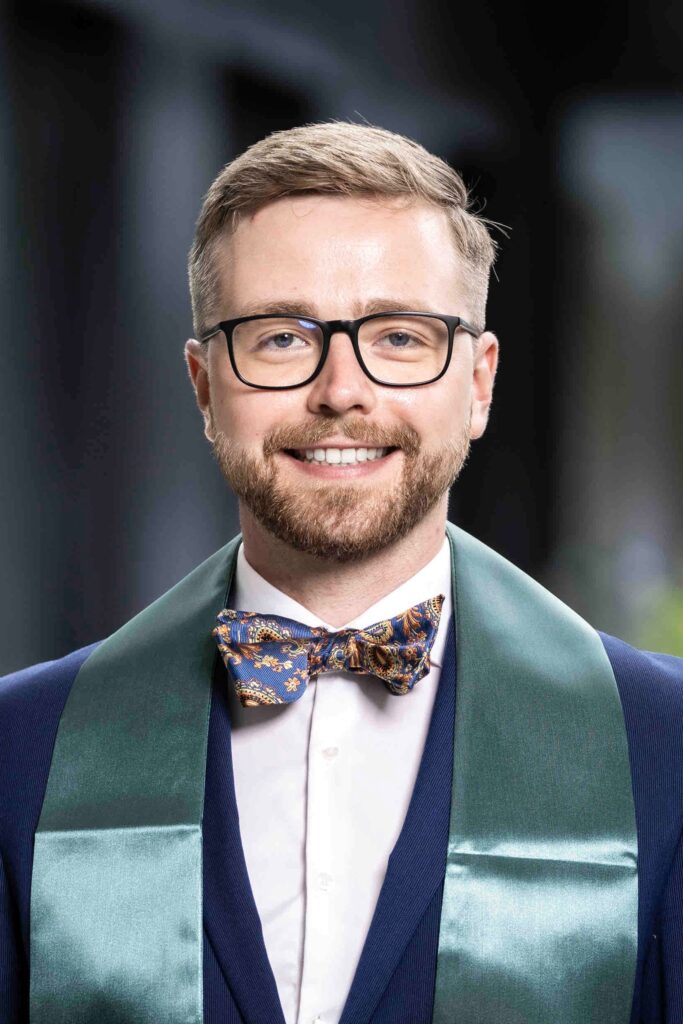
In this interview, he talks about his journey into quantum physics, the record-breaking results he achieved during his doctoral research at ISTA, and why, despite attractive opportunities abroad, he decided to return home to Slovakia.
- What led you to quantum technologies, and why did you decide to specialize in the field of spin qubits?
I got into quantum technologies through nanotechnology, which I have been involved with since my bachelor’s studies. Nanotechnology fascinated me because it’s at the core of all the electronics that surround us, and I wanted to understand it better. Nanotechnology enables us to manipulate materials at the atomic level. From there, it’s just a small step to manipulating atoms and electrons so that they retain their strange, quantum properties. This opens up a whole new world where strange phenomena occur, very different from what we experience in everyday life. And once we understand these phenomena, we can harness them, for example, to encode information into quantum bits, or qubits. That was an intellectual challenge for me. I only truly got into quantum technologies during my PhD at the world-class Institute of Science and Technology Austria, which is excellently equipped both materially and personnel-wise for this kind of fundamental research.
The decision to specialize in spins, a quantum property of elementary particles that makes them behave like tiny rotating magnets, and qubits came about, like many decisions in life, through a combination of circumstances. On one hand, I see it as one of the hot topics of our time, since quantum computers bring together two of the greatest scientific and technological achievements of the last century: quantum physics and computing. At the same time, it builds naturally on my previous studies. But the reason I chose spin qubits specifically, rather than any other type, was actually very simple and human. I was strongly drawn to the dynamic atmosphere of a particular research group, especially to its leader, who was my supervisor.
The specific topic of pairing a single photon with a single spin was attractive to me both from a technological perspective – due to its applications in quantum computing – and from a fundamental one. It involves a quantum-coherent interaction between the elementary building blocks of material reality at the level of individual particles. The electron is an elementary particle of matter, and the photon is an elementary particle of light.
- Could you describe in more detail your greatest achievements during your PhD? What was the specific significance of these results?
Current quantum computers with thousands of qubits face the challenge of scaling up to millions. Spins in quantum dots are promising candidates due to their compactness. However, their natural interaction is limited to nearest neighbors on the order of hundreds of nanometers. Long-range interactions, on the order of millimeters, could be achieved by coupling the spin with a photon, but this is challenging because of the spin’s small dipole moment. Superconducting resonators can help overcome this difficulty, yet their full potential has not yet been realized because it is hard to reproducibly control the properties of disordered superconductors.
We introduced a new method for measuring and controlling the properties of these superconducting materials directly during their preparation and growth. This method enabled the reliable fabrication of resonators with properties that exceed the previously best global results by a factor of six. By integrating this resonator with a quantum dot, we successfully achieved quantum-coherent coupling of a single elementary charge particle with one photon at a record strength. Our method and results significantly increase the achievable coupling strength between spin and photon. This is a key requirement for fast high-precision quantum operations over long distances which are the very heart of quantum computing.
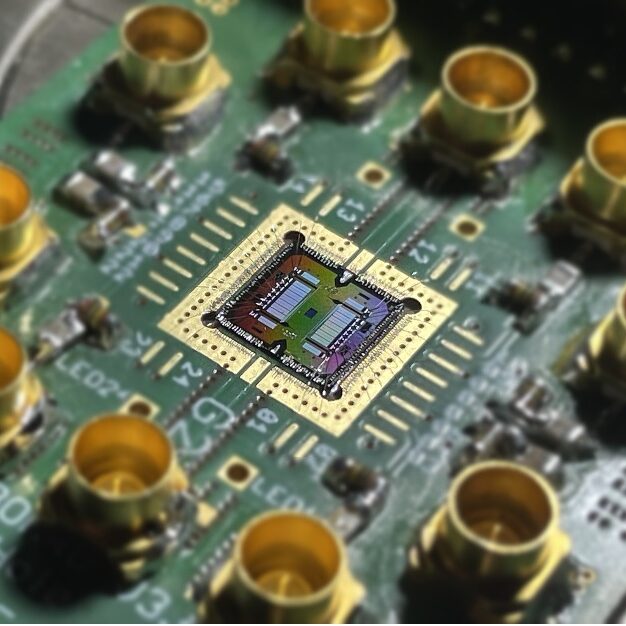
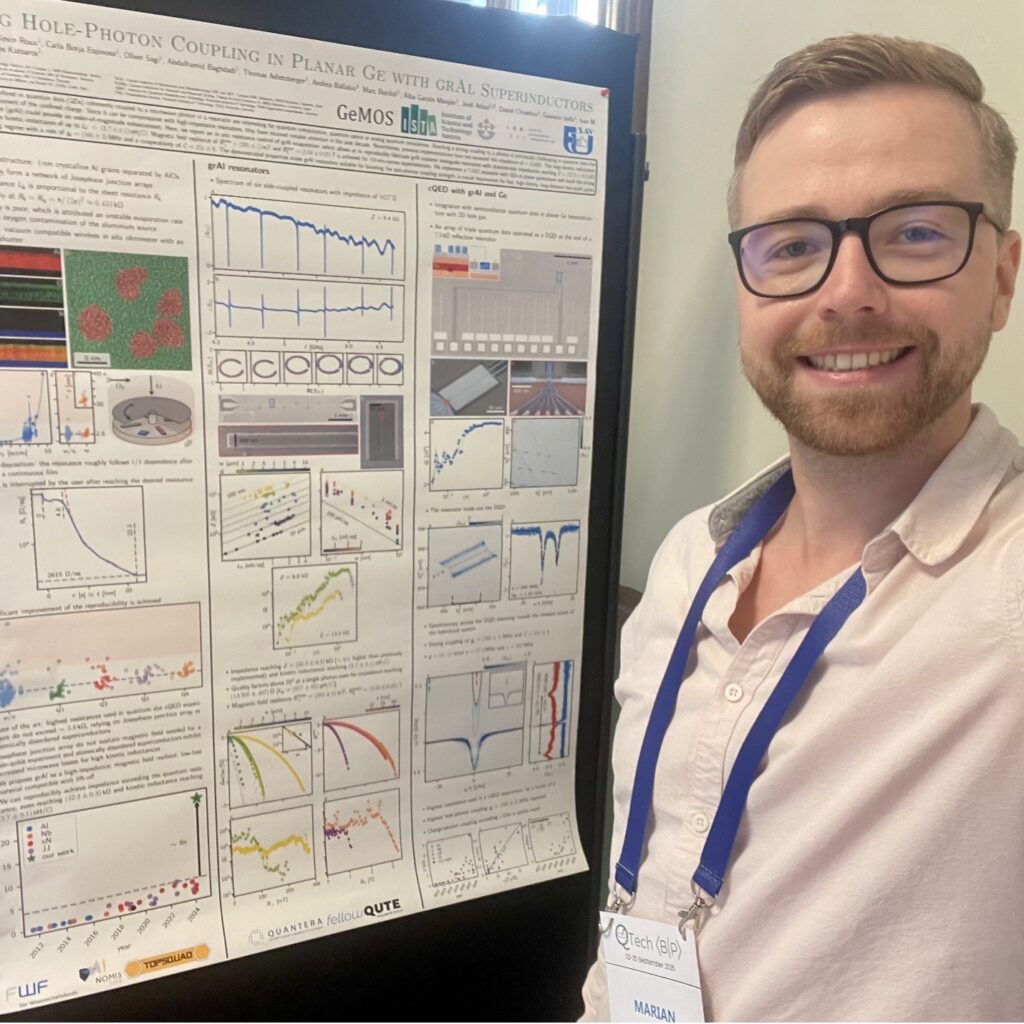
The cherry on top of my PhD was the successful presentation of our results at a conference in Davos, in front of a global community of leading scientists and prominent figures in my field, as well as a first-author publication in the prestigious journal Nature Communications. The recognition and praise that followed from some of the world’s top experts was a deeply rewarding moment after years of demanding work that for a long time felt like a dead end. All’s well that ends well.
- What other projects have you worked on that you consider key to your career?
In addition to my main project, during my PhD I contributed to three other quantum technology efforts: the development of a superconducting diode, the first successful charge-photon coupling in germanium, and the creation of a special type of qubit that combines the advantages of semiconductors and superconductors in a single device. The results of all these projects were ultimately published in Nature Communications, which I also consider a significant achievement. However, what I consider truly essential for my future career is not any individual result or specific “hard” skill, but the overall experience of working in a world-class research environment. It changed my perspective and helped me develop the ability to lead and manage myself, a project, or even an entire team.
- What has been your experience collaborating with other researchers or institutions? What differences do you notice between doing research in Slovakia and abroad?
The first major shift in perspective came when my illusion of being a hard worker was shattered. Being surrounded by students and scientists who excelled at the world’s top universities really recalibrated and grounded my self-confidence. It was a lesson in humility. I spent six years in a global community of people who had seriously and sincerely dedicated their lives to the demanding pursuit of truth, not out of a desire for money, recognition, fame, or comfort, but purely out of childlike curiosity that they had taken seriously, refined, and elevated to the highest level.
Another childlike trait that many professors had surprisingly preserved, despite their cultivated intellect, global achievements, and five-figure salaries, was that they didn’t take themselves too seriously. The atmosphere was remarkably open and friendly. Everyone addressed each other by first name, doors were always open, and it was common to stay for a beer at the campus bar after hours…. Nobody cared who had a longer list of titles, publications, citations, or h-index.
The national and cultural diversity was both refreshing and enriching. The institute, with around a thousand employees, included people from 80 different nationalities. Being in such an environment puts into perspective certain things you once considered absolute, while also deepening your appreciation for values shared across cultures, such as truth, respect, honesty, hard work, …
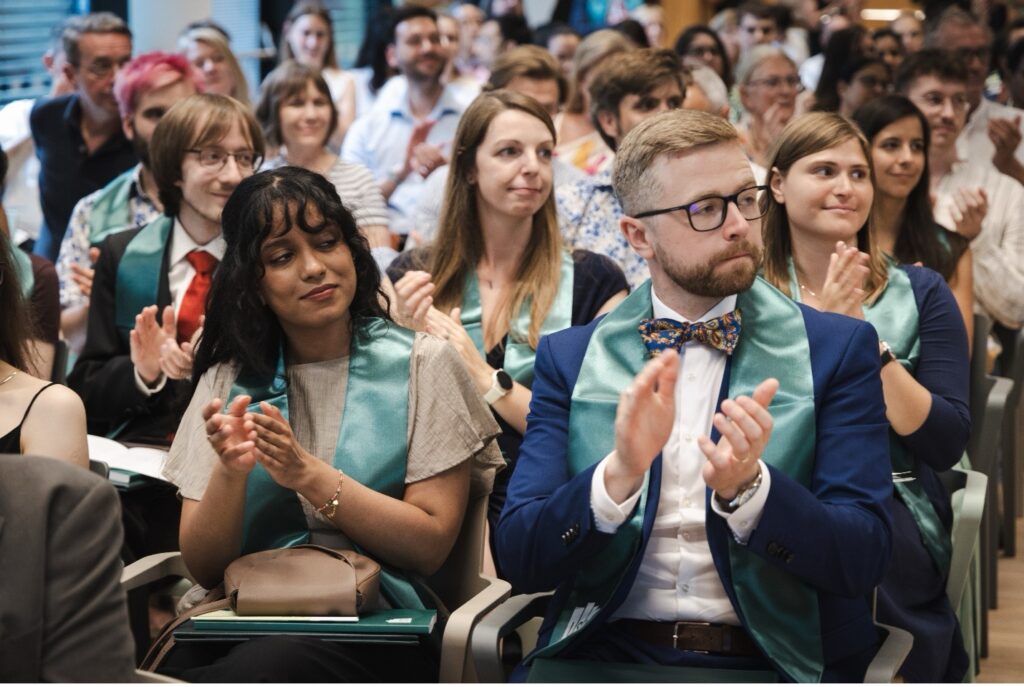
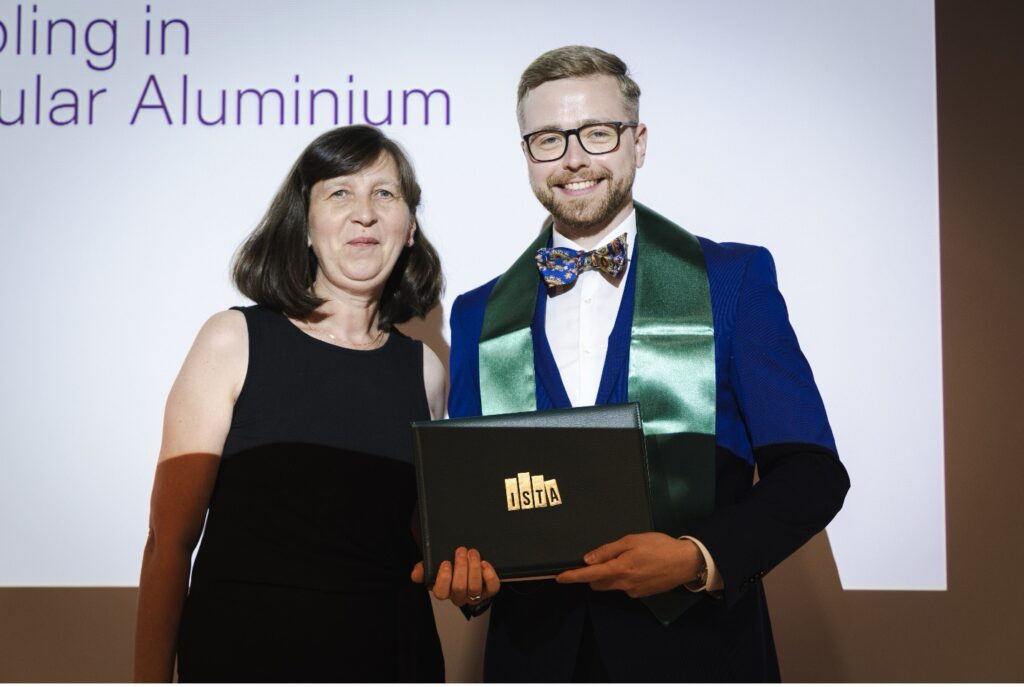
It was also fascinating to experience a finely tuned support system designed so that scientists could focus entirely on their research without wasting time on unnecessary distractions. Tasks that didn’t require a scientist’s creativity were delegated to assistants, grant officers, IT specialists, technicians, manual workers, and others. At the same time, the system was optimized to ensure scientists were as satisfied as possible. Available services included an ombudsperson, mentor, conflict facilitator, therapist, coach, hairdresser, masseur, presentation trainer, writing coach, time management and leadership trainers, as well as a park with a pond, a bar with a terrace, a gym, and various sports facilities. A happy scientist is a productive scientist. But this applies to any creative profession, and probably to most professions in general.
What was truly transformative for me was the sheer volume and breadth of conversations, meetings, discussions, debates and colloquia with guests and lectures respectful arguments about how things really work and how to verify, refute or better argue them… These were not just add-ons to “real” scientific work but formed the very core of it. And this did not happen only within research groups or departments but even across different disciplines. One example says it all: every Friday evening there was an institute wide event called “Think and drink,” where after a lecture on a specific topic for a broad audience a lively discussion would break out in an informal atmosphere with refreshments where a mathematician would share ideas with a biologist, a neuroscientist with a physicist, a chemist with an astronomer and so on. Scientists do not only want to understand their narrow slice of reality. Scientists want to know everything. Often the debate would even drift into topics about the history and philosophy of science on the scientific method and its limits, and the role and purpose of science, which I believe every scientist should reflect on.
- Which mentor has played a significant role in your career and why?
My PhD. supervisor, Dr. Georgios Katsaros, played a crucial role. Even though during the tough times of my doctoral project I often got frustrated with him, blamed him for partial failures and dead ends, in hindsight I truly appreciate his great influence. A research group leader isn’t someone who knows everything. In fact, when it comes to my specific topic, he knows much less than I do. I think it’s fair to say that the PhD student knows his or her narrow topic better than anyone else in the world. One could say that a group leader is more of a manager, leader, mentor, and coach rather than a scientist in the usual sense. Looking back, I see that he fulfilled this role perfectly: he invited me to help shape the project vision, to make key decisions, delegated leadership of others to me, and asked the right questions. He motivated me when I needed motivation, gave me space when I needed peace. And above all, saw me as a whole person with challenges beyond work and was always willing to listen and help. He gave me so much more by not doing things for me, but by helping me do them myself.
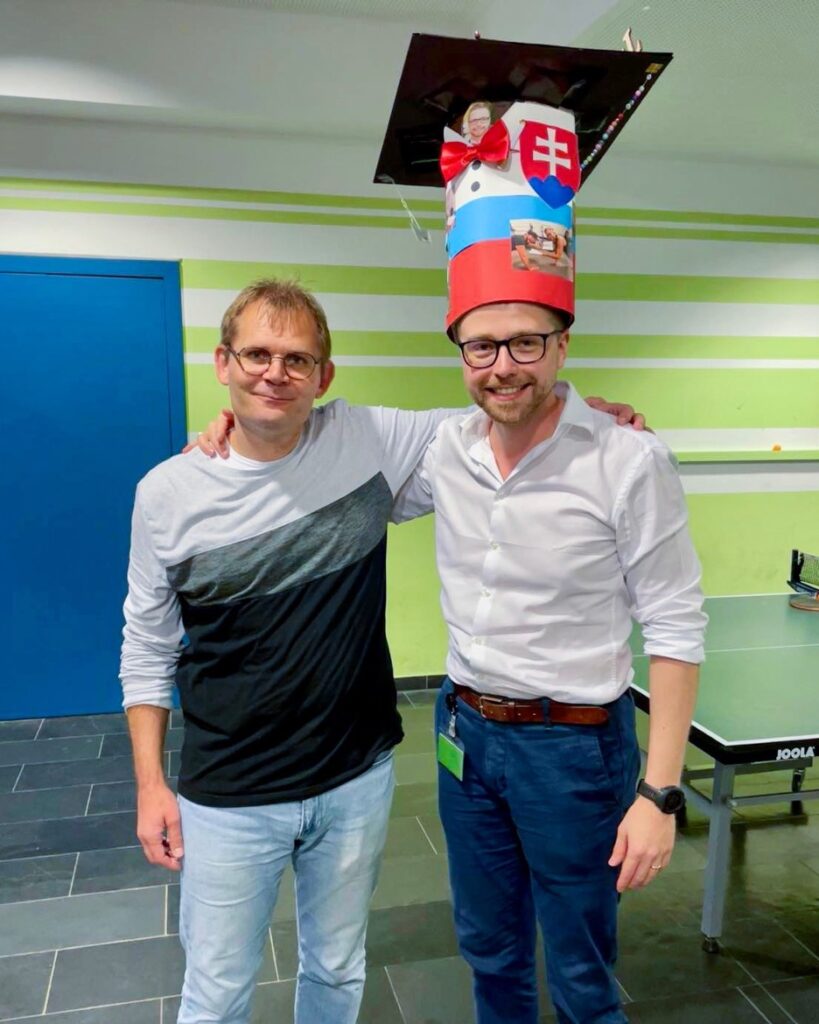
He’s known for never being afraid to ask a “stupid” question during lectures, and for exploring physics with childlike curiosity, simply because he finds it beautiful. During exams, he was tough – not because he asked questions, he already knew the answers, just to check if students knew them too. In those cases, he could help find the answer. But rather because he asked the kind of questions he didn’t know the answers to, and genuinely wanted to understand. He’s always smiling, joking, full of positive energy, sometimes almost annoyingly optimistic. I’d be happy if even a little of that has rubbed off on me.
My friends would consider my answer incomplete if I didn’t mention two of my most important academic mentors, even though they have been dead for centuries: Aristotle, the first scientist and teacher of scientists, and especially Thomas Aquinas. I studied their works in the evenings, and they profoundly expanded the way I think. While many of their specific scientific claims are now outdated, even amusing, their method, clarity, breadth, depth, and love of truth continue to teach me to pursue truth with passion, integrity, perseverance, and in every place, it might reveal itself.
- What inspires you the most in science, and what motivates you when working on challenging projects?
I do science because the world is amazing. Wonder is the desire to know. All people naturally desire to know. Those who preserve and cultivate their childlike wonder become philosophers or scientists. I have preserved my childlike wonder, which is why I keep asking, “Why?” What I love most about science is its freedom. This freedom stands in contrast to servility and subordination. True science serves no other purpose, but its goal, knowledge, is a sufficient and noble goal in itself. Thomas Aquinas said that for the perfection of human society, it is necessary that some people devote themselves entirely to the pursuit of truth. This idea resonates deeply with me, both for the nobility inherent in this calling and for its uplifting effects on society as a whole. In challenging moments, I am motivated precisely by the awareness of this inner value, regardless of whether it will be quickly recognized or commercially used.
- Do you have any interesting story or moment that influenced your research journey?
Scientific work is more like an ant’s steady march than a series of “Eureka!” moments. But I did have one of those emotional moments after many failed attempts, months of hopelessly trying similar approaches, and hitting dead ends. Suddenly, I noticed something strange on the screen. I unplugged a cable from the device that I intuitively suspected was causing noise, and voilà! An effect appeared demonstrating a quantum-coherent interaction between a single elementary charge and a single photon. Immediately – though not quite naked and running out of a bathtub like Archimedes – I rushed to my supervisor to share the joyful news. For him, it was an extra reason to celebrate because about two years earlier, in a moment of weakness, he had bet me that he wouldn’t eat sweets until we discovered this effect. For context, until then, he had no problem eating an entire chocolate bar in one sitting.
- Why did you decide to return to Slovakia and work at the SAS?
My decision to return was based on two reasons. The first and most important was my family, friends, community, relationships, and bonds that are deeply personal and irreplaceable to me. Not everything can be compensated by money or career. The second reason, perhaps less common but equally important to me, was a certain sense of commitment, I’m not ashamed to say love, toward the country where I grew up. Just as a person does not choose their family based on perfection, wealth, education, or culture, but stays with them because of a deep inner connection, I felt the same way about Slovakia. Slovakia may not be objectively the best, but it is mine. As Chesterton wrote: “They did not love Rome because she was great. She was great because they had loved her.”
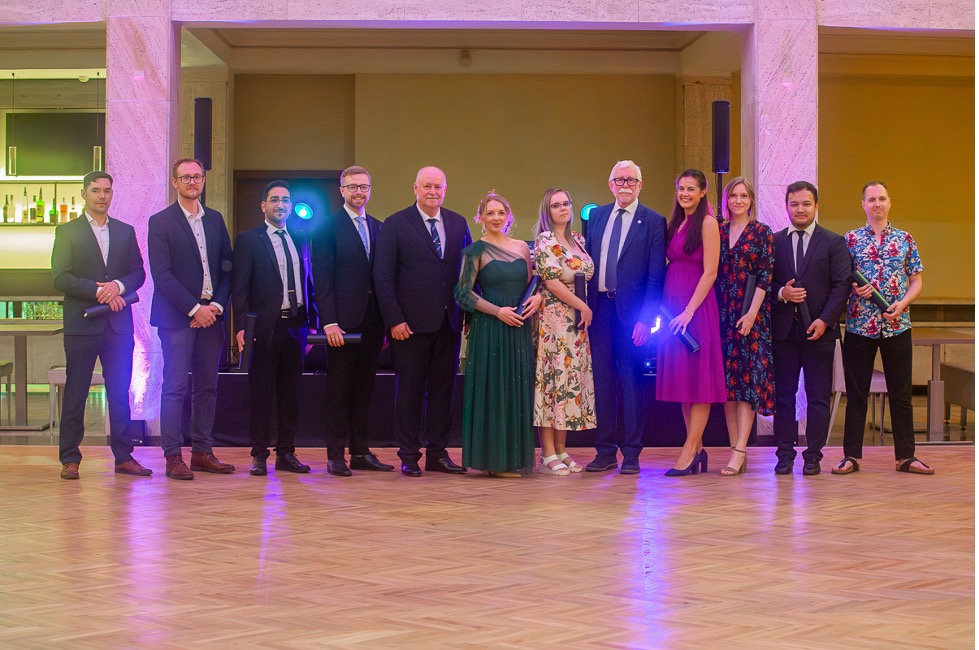
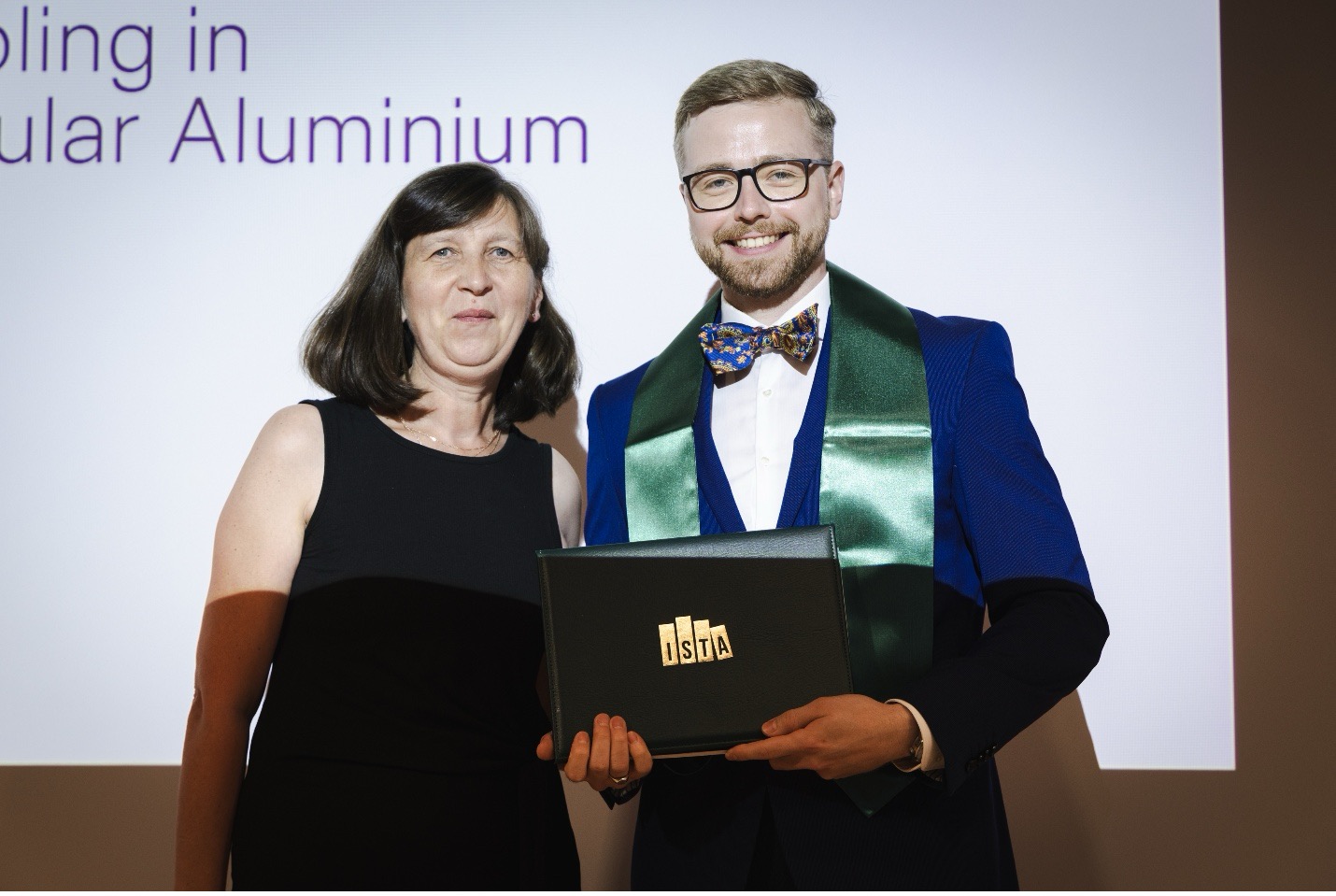
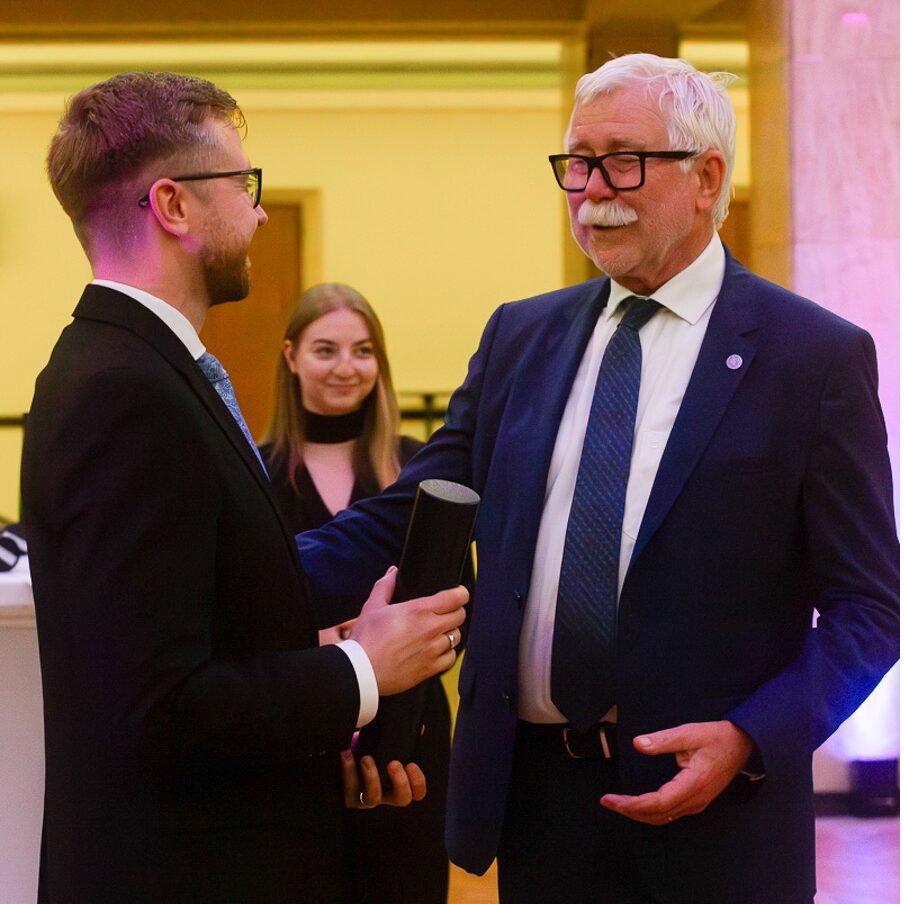
Honourable Mention in the Slovak Academy of Sciences Young Scientists Competition for Researchers under 35. Source: SAS
- How do you envision your contribution to global progress in quantum technologies?
If my primary goal was to have a global impact in quantum technologies, I would have accepted a postdoctoral offer from one of the world’s top institutions. Places like Oxford, Delft, or Lausanne offered me two to three times the salary, and in Hong Kong, they even proposed adding an extra zero to my income. But I chose local impact instead. In a certain sense, I would say that my goals are greater than global progress in quantum technologies, or at least, I believe they hold deeper value. If I can contribute, even in a small way, to helping the academic and university environment become a place that does not merely produce “employees for the labor market,“ but forms intellectually mature and magnanimous individuals with broad thinking, people who are unafraid of big questions and can respond to them with creativity and integrity, and at the same time future leaders who will passionately guide the next generations, then I believe my vision can have an impact not just of a different scale, but of an entirely different kind.
- What is your vision for quantum technologies in Slovakia?
Instead of focusing on specific plans for laboratories or grant applications, I would like to draw attention to something more important and profound, a mindset that should shape every academic and scientific environment: magnanimity. Magnanimity means striving for great things, things worthy of great honor. Not for the sake of honor itself, and certainly not for lesser goals like profit or fame, but for their intrinsic value, their nobility, their dignity. In an academic context, this could mean prioritizing projects that seek to understand the fundamental nature of the world and of nature itself over those that promise quick, applicable, or commercial outcomes. It could also mean that educating students is not reduced to efficiently transferring marketable skills, but is seen as forming whole human beings, people unafraid to think big, to ask difficult questions, and to seek answers with honesty and creativity. Magnanimity would be reflected in our everyday academic attitudes, in the willingness to share ideas without concern for authorship points, in the ability to let a younger colleague grow, and in the readiness to stand up for the truth even when it is inconvenient. It would mean creating an atmosphere where we do not aim for the highest publication count, but for the highest degree of truth. Ultimately, such an environment would not only be more humane, it would be more effective. I feel that my calling is to help keep this sense of magnanimity in clear view.
Interview by Diana Cencer Garafová, QUTE.sk – Slovak National Center for Quantum Technologies
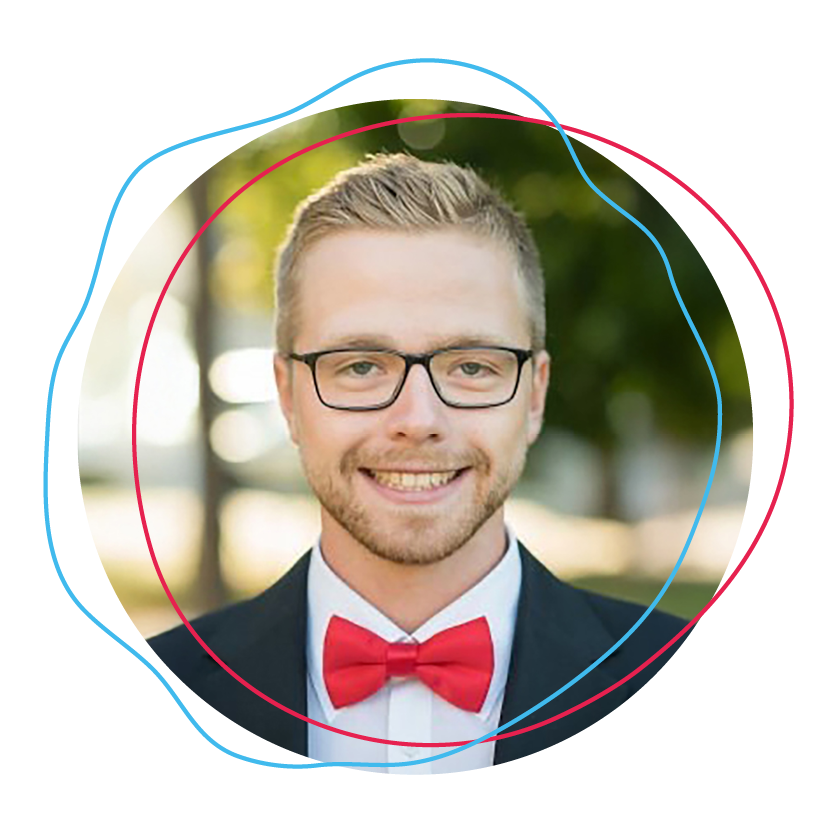
Ing. Mgr. Marián Janík, PhD. is originally from Bratislava, Slovakia. He completed his engineering degree at the Faculty of Electrical Engineering and Information Technology of STU in Bratislava, specializing in Nuclear and Physical Engineering, while simultaneously earning a master’s degree in Solid State Physics at the Faculty of Mathematics, Physics and Informatics at Comenius University. In 2024, he successfully completed his PhD at the Institute of Science and Technology Austria (ISTA) in the research group of Georgios Katsaros, where he focused on coupling single photons with single elementary charges in semiconductor quantum dots, achieving one of the leading results in this field worldwide. Throughout his research, he gained extensive experience in resonator and qubit spectroscopy, nanofabrication, microwave engineering, and experiments with cryogenic systems.
He is currently a postdoctoral researcher at the Institute of Electrical Engineering of the Slovak Academy of Sciences, supported by the fellowQUTE funding scheme. At the same time, he teaches at the Slovak University of Technology in Bratislava. Building on his previous experience, he actively collaborates with partners within the QUTE.sk initiative, leveraging their existing infrastructure. His long-term goal is to establish a laboratory for quantum technologies in Slovakia, contributing to the development of the local research community and advancing global quantum science and technology.
